
After a collision, most people feel shaken rather than injured. That experience is common and…
Why Car Accident Injuries Become Chronic Problems (and What Actually Stops That From Happening)
A collision sets a structural process in motion that doesn’t pause while you decide whether to seek care. The gap between impact and evaluation isn’t neutral time. It’s time the body uses to adapt around an injury in ways that compound what was already there. What happens in the first days after a crash shapes whether you recover fully or manage a recurring problem for months.
Key Takeaways
- Feeling functional at the scene doesn’t mean nothing was damaged; the body’s stress response can mask injury severity for days
- Soft tissue injuries require targeted, active care to heal correctly; rest alone doesn’t restore joint mobility or prevent scar tissue formation
- Every day between the collision and a clinical evaluation allows compensation patterns to develop on top of the original injury
- Florida’s Personal Injury Protection coverage has a treatment window tied to the accident date, so confirming your status early keeps options open
- Stopping care when pain decreases is one of the most reliable ways to turn an acute injury into a recurring one
Why You Might Feel Fine Right After the Crash
This is the part that catches most people off guard, and it shapes every decision that follows.
When your body absorbs sudden physical impact, the nervous system triggers a stress response that floods the system with hormones designed to keep you functional under threat. It’s not pain relief in the way medication works. It’s the body prioritizing movement and alertness over accurate pain signaling. The structural damage has already happened. Inflammation is already building in strained ligaments and compressed joints. You just don’t have full access to that information yet.
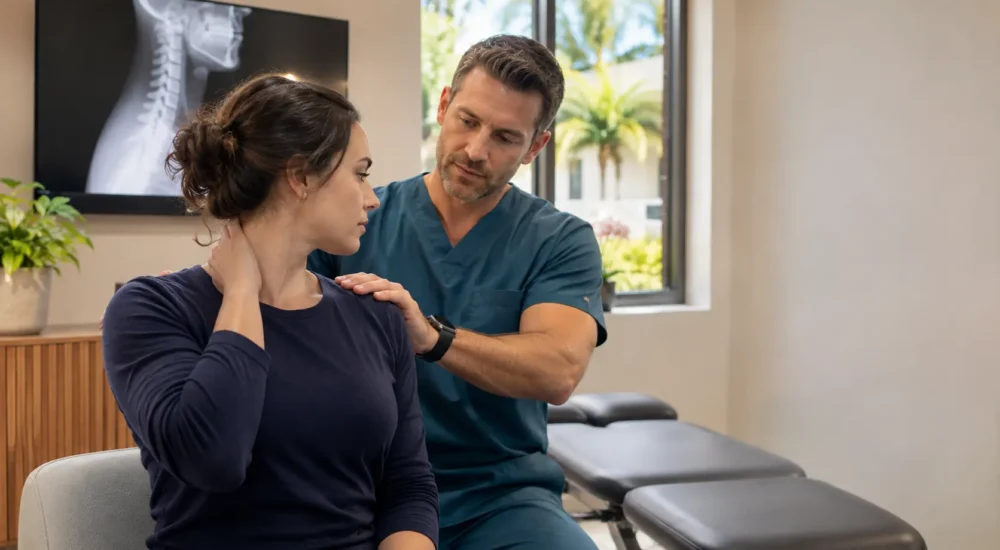
Whiplash is the clearest illustration of how this plays out. The rapid, forceful movement of the cervical spine strains soft tissue in the neck, but the swelling and nerve sensitization that drive its symptoms develop gradually. By day two or three, turning your head may have become genuinely difficult. By the end of the first week, headaches and upper back tension often join the neck pain.
That delay isn’t psychological. It’s the biology of soft tissue injury. The inflammation cycle, the muscle guarding response, and the gradual tightening of restricted joints all follow a biological timeline that moves slower than your initial pain signal. Waiting to see whether symptoms peak before seeking care isn’t a cautious approach. It gives the injury more time to generate structural consequences that then have to be addressed on top of the original problem.
What Actually Turns a Collision Injury Into a Long-Term Problem
Accident injuries don’t become chronic randomly. There are specific, predictable patterns that drive that outcome, and they share a common thread: treating a structural problem like it’s a temporary inconvenience.
Waiting to see if it resolves. Rest is appropriate for fatigue. It isn’t treatment for restricted facet joints, forming scar tissue, or a cervical spine that’s been forced past its normal range of motion. Rest gives your body time to adapt around the injury, and that adaptation then becomes a structural habit that’s harder to unwind later.
Letting the documentation gap grow. Every day between the accident and your first clinical evaluation creates a gap in your injury timeline. That gap becomes a point of dispute, both medically and with insurance. Early evaluation builds the record that protects your recovery and your claim at the same time.
Treating only the loudest symptom. The force of a rear-end collision travels through the entire spine. Patients who arrive focused only on neck pain frequently have unaddressed lumbar strain or shoulder involvement that surfaces weeks later. A full spinal evaluation catches what a single-symptom focus misses.
Using medication as the care plan. Pain medication changes how pain registers. It doesn’t restore joint mobility, break up soft tissue adhesions, or address why the signal is being generated. Managing symptoms isn’t the same as fixing what’s causing them. Pain medication quiets the signal; it doesn’t change what’s generating it.
Stopping care when pain decreases. Pain reduction isn’t structural recovery. Joints need to be retrained. Soft tissue needs to complete its healing cycle. Stopping at the point where symptoms improve, before structural correction is finished, is a reliable path to relapse. Pain that keeps returning on a schedule isn’t a healing failure. It’s a structural one.
What Real Recovery Actually Requires
The goal of post-accident care isn’t just pain relief. It’s restoring the mechanical function the collision disrupted.
At Schnipper Chiropractic and Wellness Center, post-accident care is built in layers that match what the injury actually requires. Spinal adjustments restore joint mobility and reduce the nerve irritation that restricted segments generate. The full range of services includes soft tissue therapy to address muscle guarding and the adhesion formation that begins within the first days after impact. Where tissue damage is more significant, shockwave therapy can accelerate tissue repair in ways that passive rest simply can’t reach.
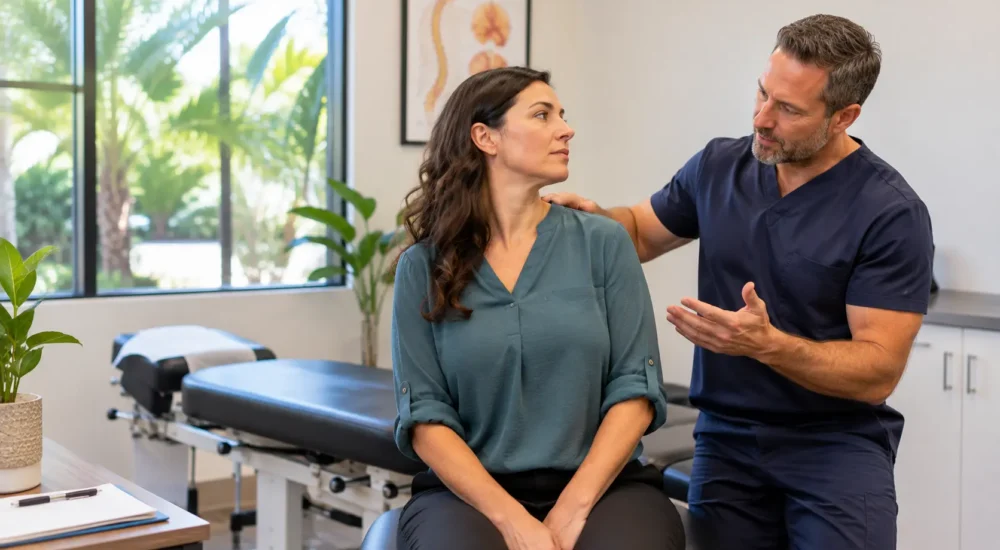
The first appointment is an evaluation before it’s a treatment. It maps the injury: which spinal segments are restricted, where soft tissue damage is concentrated, what compensation patterns have already started to form. That clinical picture drives every decision that follows.
Consider what delay actually costs. Someone is rear-ended at moderate speed. They feel stiff but functional, take over-the-counter pain medication, and decide to wait a week. By the time they arrive for care, the cervical spine has already started adapting around the restricted segment, and the muscles in the upper back have recruited into guarding patterns to protect the area. The original injury is still present, and now the body’s protective response has layered its own structural changes on top of it. That’s a longer, more complex recovery than early intervention would have produced, because there’s more to work through, not because the outcome is different in kind.
If you’re in the first week after a collision and wondering whether your symptoms warrant evaluation, the relevant threshold isn’t pain severity. It’s whether your body was exposed to impact.
Acting Now vs. Waiting: What’s Actually at Stake
| Your situation | What happens if you wait | What evaluation and care now provides |
|---|---|---|
| First few days, stiffness only | Stress response is masking actual injury severity; compensation patterns start forming before symptoms are fully present | Captures the injury before tissue adaptation begins; establishes the clinical record |
| Days three through seven, pain emerging | Soft tissue begins forming scar tissue; documentation gap widens; injury grows more complex | Active care begins before patterns solidify; accurate injury timeline is recorded |
| Week one to two, managing with medication | Chronic compensation habits are establishing; PIP documentation window may be closing | Full spinal assessment addresses the whole injury, not just the most prominent symptom |
| Pain has decreased, considering stopping | Structural recovery is incomplete; relapse risk is significant | Functional benchmarks confirm real healing, not just symptom suppression |
| Several weeks out, still symptomatic | Established scar tissue and chronic patterns require substantially more work to address | Recovery is still achievable; the path is longer than early care would have required |
When Chiropractic Care Isn’t the Right First Step
Chiropractic care is appropriate for the substantial majority of soft tissue and spinal injuries that follow collisions. It isn’t the right primary intervention when there’s a suspected fracture, when neurological symptoms are present (numbness, weakness, or changes in bladder or bowel function), or when imaging suggests active nerve root compression from a herniated disc. Those presentations require medical evaluation first. Chiropractic care can still play a meaningful role in the recovery that follows, but it isn’t where that process starts.
It’s also worth being direct about timelines. Arriving for care two months after an accident with established scar tissue and chronic compensation patterns is a different clinical situation than arriving in week one. Recovery is still possible. It takes longer. Any provider who offers a confident timeline before completing an evaluation isn’t working from your actual clinical picture. What you can expect from Schnipper Chiropractic is an honest assessment of where you are and a realistic care plan built from that point forward, not a number pulled from a brochure.
Why the Insurance Window Matters More Than Most People Realize
Florida’s Personal Injury Protection coverage has a treatment window that begins at the accident date. Waiting too long to begin care can close access to that coverage entirely, before you’ve had the chance to understand what your injury actually involves. Your specific policy terms govern what applies to your situation, which is exactly why confirming your status early keeps options open that delay will close.
The financial reason to act quickly and the medical reason to act quickly point in exactly the same direction. If you have questions about your coverage or what your next step should be, reaching out directly gets you a real conversation faster than trying to piece it together on your own.
Flexible payment options are also available for patients who have questions about costs. You can find more about what to expect on the pricing page or ask directly when you call.
Frequently Asked Questions
How do I know if my accident was serious enough to see a chiropractor?
The threshold for evaluation isn’t vehicle speed or visible damage. Any collision that moves your body unexpectedly can strain the cervical spine and surrounding soft tissue. Low-speed impacts produce whiplash-type injuries regularly. If your vehicle was hit or struck something, an evaluation is the right call regardless of how you feel at the scene.
What happens at the first appointment after a car accident?
The first visit is a clinical evaluation, not a standard adjustment session. Your provider assesses range of motion, identifies restricted spinal segments, and locates soft tissue damage. You’ll discuss the mechanics of the accident and your current symptoms. Treatment may begin the same visit, but the evaluation drives the care plan.
Can I still get help if several weeks have passed since my accident?
Yes. The sooner care begins, the more straightforward recovery tends to be, but care is effective later as well. The approach shifts toward releasing established patterns and restoring function rather than preventing them from forming. It’s a longer process than early intervention would have been, and it’s still worth pursuing.
Will chiropractic care conflict with treatment from my medical doctor?
Chiropractic care and medical care address different dimensions of accident recovery. Your chiropractor addresses spinal mechanics and soft tissue function. Your physician manages medication, imaging, and conditions that require medical oversight. Coordinating both typically produces better outcomes than either approach alone.
How long does recovery from a whiplash injury take?
It depends on the severity of the injury, when care began, and how much time compensation patterns had to establish before treatment started. Your provider can give you a realistic timeline after evaluating your actual injury. A number offered before that evaluation hasn’t been earned by the clinical picture.
What if I don’t have insurance or PIP coverage?
It’s worth a direct conversation with the Schnipper Chiropractic team before assuming what you can or can’t access. Flexible payment options are available, and the pricing page outlines what to expect. Don’t let an assumption about cost delay care that’s still well within reach.
Is it normal to feel sore after the first few adjustments?
Some temporary soreness after early adjustments is a normal response, particularly when joints that have been restricted start moving again. It isn’t a sign that treatment is making things worse. It’s tissue responding to restored mobility, and it typically settles within a day or two. If pain escalates significantly and doesn’t settle, that’s a conversation to have directly with your provider.
If you’ve been in a collision and you’re in the Royal Palm Beach, Wellington, Loxahatchee, or surrounding area, the window for the most effective intervention is still open. Schnipper Chiropractic and Wellness Center has spent 25 years helping people in this community recover from accident injuries and reclaim full function. Don’t let the documentation gap grow or give structural patterns more time to set. Call to schedule your evaluation and start with an honest look at where you are.
The Wellington office is at 129 S. State Road 7, Suite 402. The Royal Palm Beach location is at 1011 N. State Road 7, Suite D. You can also reach out through the contact page to get started.
About the Author: Brian Schnipper, D.C. is the founder and lead chiropractor at Schnipper Chiropractic and Wellness Center. His focus is on identifying the structural causes of pain and building individualized care plans that address them directly, from spinal adjustments and soft tissue therapy to auto accident injury recovery and rehabilitation. The practice’s new Palm Beach County location is now open at 7070 Seminole Pratt Whitney Rd., Suite #9, Loxahatchee, FL 33470.

Related Posts


Comments (0)